 Over more than three decades as a marketer, I’ve seen how seismic changes in technology can disrupt plans and programs. What worked a few years ago can quickly become obsolete.
The rise of email marketing, web content and SEO, social media and real-time engagement, and now AI have each disrupted what all kinds of people and organizations are doing.
I’m a member of the Marketing AI Industry Council, an invite-only think tank of industry leaders who share a passion for exploring the impact of AI on the marketing profession. We’re a diverse group of marketing leaders from organizations like Cleveland Clinic, Ford Motor Company, Google Cloud, and many more. We recently came together both online and in-person to create the 2026 Marketing Talent AI Impact Report, a project spearheaded by SmarterX and the Marketing AI Institute.
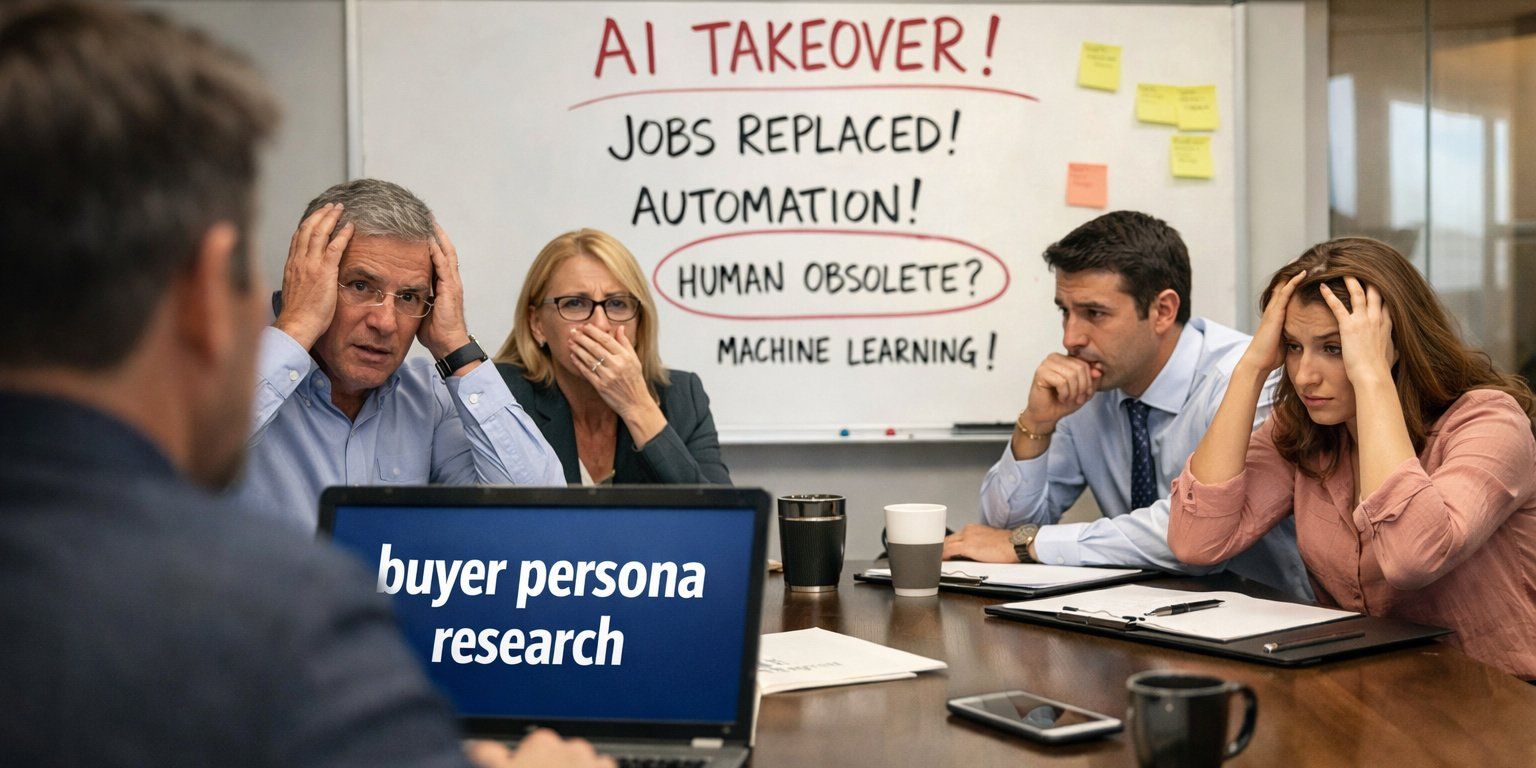
The report’s central hypothesis confirms what you likely already know. Within the next year or two, AI will force a radical transformation of marketing talent, teams, and how companies are structured.
The report emphasizes, “AI is no longer an emerging skill in marketing. It is becoming the baseline of the entire profession.”
However important AI is, I’m excited that a theme running through the insights isn’t about replacing people with machines.
“Companies that commit to innovation and growth can create opportunity even as others contract,” says my friend Paul Roetzer, Founder & CEO, SmarterX & Marketing AI Institute and Chair, Marketing AI Industry Council. “The professionals who develop AI literacy, who learn to collaborate with these systems, who bring critical thinking and creativity to their work, they will have superpowers. They will outperform, out-create, and out-earn their peers.”
Download the full 2026 Marketing Talent AI Impact Report here.
My observations about the report and Council discussions:
Talking About AI (or not): Silence = Fear
When company leadership goes silent about AI, anxiety grows. The absence of clear direction often breeds rumor, resistance, and fear. The Council’s advice is to communicate boldly. The best leaders are already setting a vision for how AI will make the organization more human-centered and insisting that all employees must get comfortable with AI. When AI is framed as a tool to unlock human potential, rather than a force for layoffs, teams get curious instead of cynical.
From Execution to Orchestration
AI has quickly become a base requirement to even play the marketing game. What used to take creative, manual effort is partly handled now by digital co-workers, freeing humans to orchestrate, synthesize, and judge outcomes at a higher level. With the help of AI, marketers’ value has transitioned from cranking out assets to seeing the big picture and fostering collaboration among humans and machines.
 The Human Edge Is the Real Differentiator
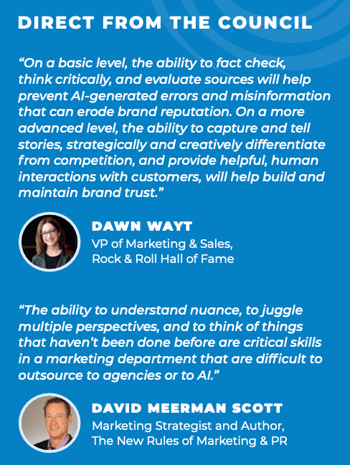
As AI lowers barriers to formerly complex work, what stands out is what machines can’t do. I’m encouraged by the importance of thinking strategically, showing empathy, building teams, and nurturing curiosity. The report names this unique value the “Human Edge.” When I look at organizations that create true fandom, loyalty that goes beyond transactional, they stand out for exactly these traits. That’s why the best hiring is less about technical mastery and more about adaptability, communication, and critical thinking. Recruit people who see AI as a collaborative teammate, not an existential threat!
Digital Co-Workers: More Than Software
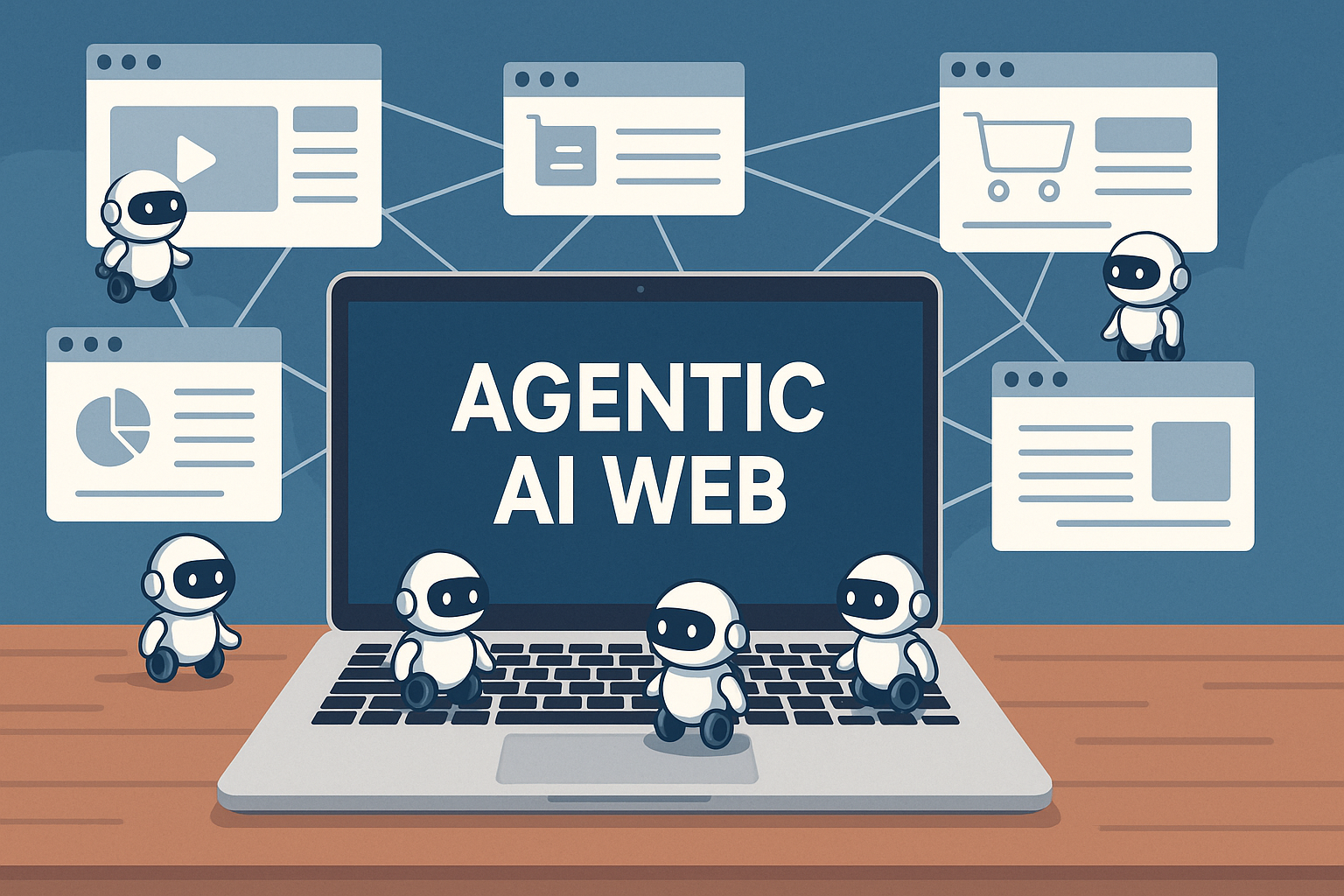
The report suggests we must start treating AI agents not as faceless apps, but as digital team members, with specific roles and measurable goals. The Council warns that many agent “capabilities” are still aspirational, not ready for prime time and suggests rolling out AI in phases: start with simple prompt-based tasks, move to automations, and only then experiment with true agent workflows. All along, make sure humans hold the line on storytelling, quality, and brand strategy. Technology can assist, but human vision leads.
Governance and Real AI Literacy
The organizations making progress embed AI literacy right into their workflow, daily, not here and there. Robust governance includes giving people space to experiment where it’s safe, and drawing brighter lines around high-risk, public-facing activities. People are most creative when they trust the boundaries and know their leaders have their backs.
What AI Means for Agencies
The report ends with a bold forecast for marketing agencies. The old roles are up for renegotiation. As brands internalize content and production, agencies can’t win on speed and scale. Their future relies on offering unique expertise, deep strategic insight, and the kind of breakthrough creativity that no robot can replicate. In other words, agencies must evolve from vendors to genuine partners in building and sustaining fandom.
Fandom Now!
As I’ve shared on my blog and in LinkedIn posts over the past several months, I am making a fundamental shift in my own work, partly due to AI and partly because of the increased toxic nature of social algorithms. I’ve moved away from my focus over the past two decades of framing marketing as content creation and real time engagement. Now I am absolutely committed to the idea of marketing as the genuine human connection that builds fans of any organization, idea, or product.
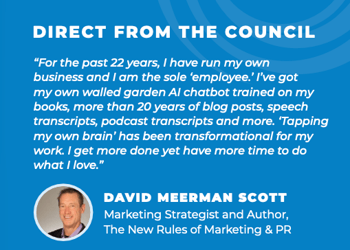 I’m encouraged that my peers at the Council agree that the AI era is not about subtracting humans from the process. AI allows us to unleash us to do what we do best: create, connect, inspire, and lead.
If you want to future-proof your marketing, and your organization, lean into transparency, foster AI literacy, and double down on the uniquely human strategies that turn customers and employees into fans!
I’m grateful to help guide these discussions with the Marketing AI Industry Council. The future we see is about re-centering the human edge at the heart of every organization.
Disclosures:
-
I am an investor in SmarterX and Marketing AI Institute.
-
I used Google NotebookLLM to summarize the 2026 Marketing Talent AI Impact Report. I reviewed the summary, made some edits and then ran it through my own personal AI chatbot trained on more than twenty years of my blog posts, several books, transcripts of speeches and other content. I asked my chatbot for takeaways of the report based on my thinking. I used that as the starting point for this post which was significantly edited from the AI output.